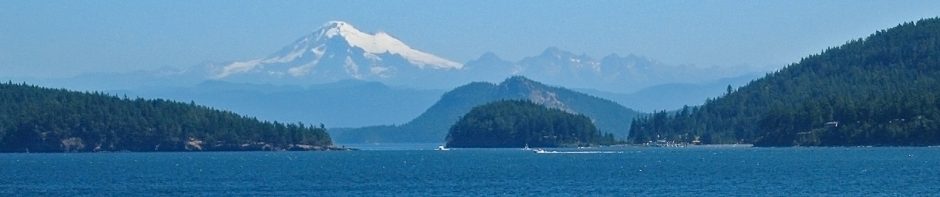
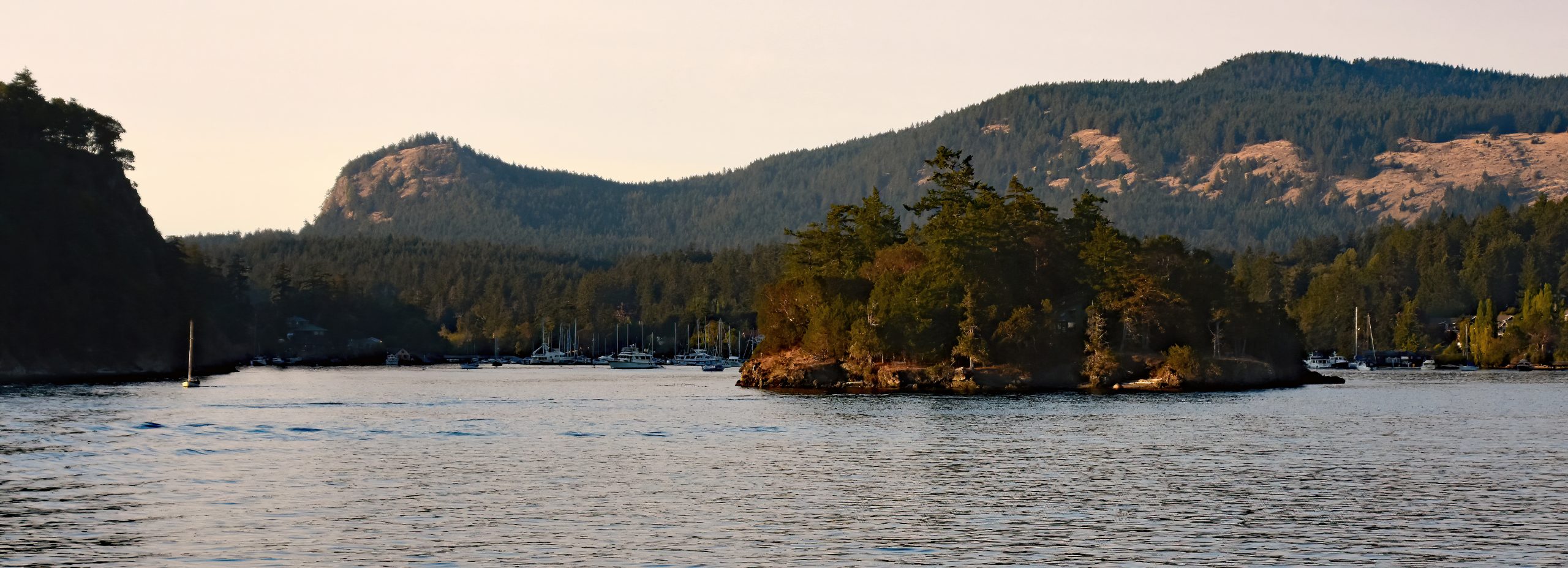
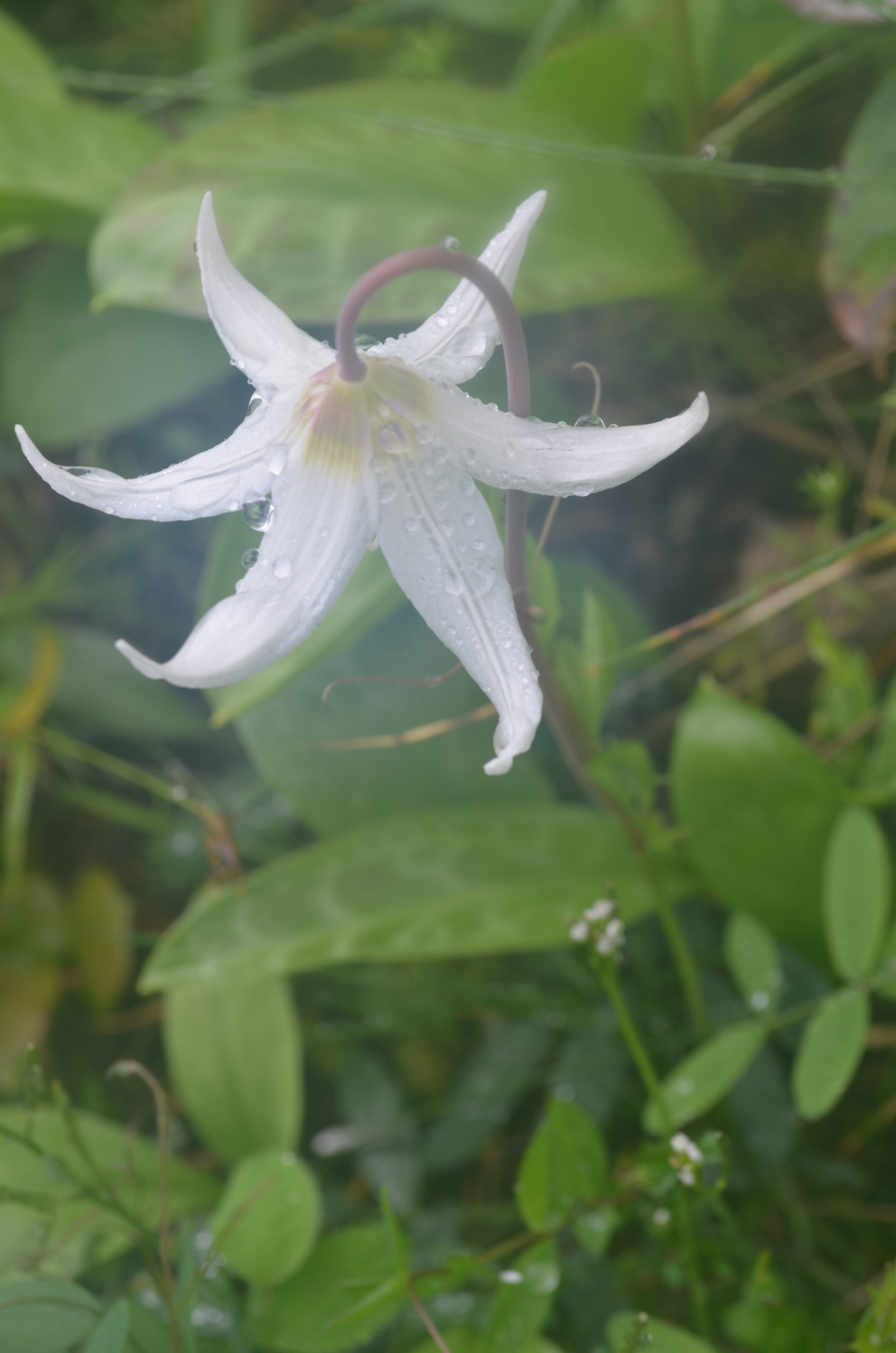
Can you guess how many deer-related names exist in the San Juan Islands? Maybe you’re familiar with Fawn Island tucked into Deer Harbor on Orcas Island, the exotic species of Fallow and Sika deer living on Spieden Island, or the Fawn Lily growing on Yellow Island. If not, I invite you to read further to satisfy your curiosity. Moreover, what started as an article about Fawn Island has evolved into a deer-themed post involving a couple of former movie stars.
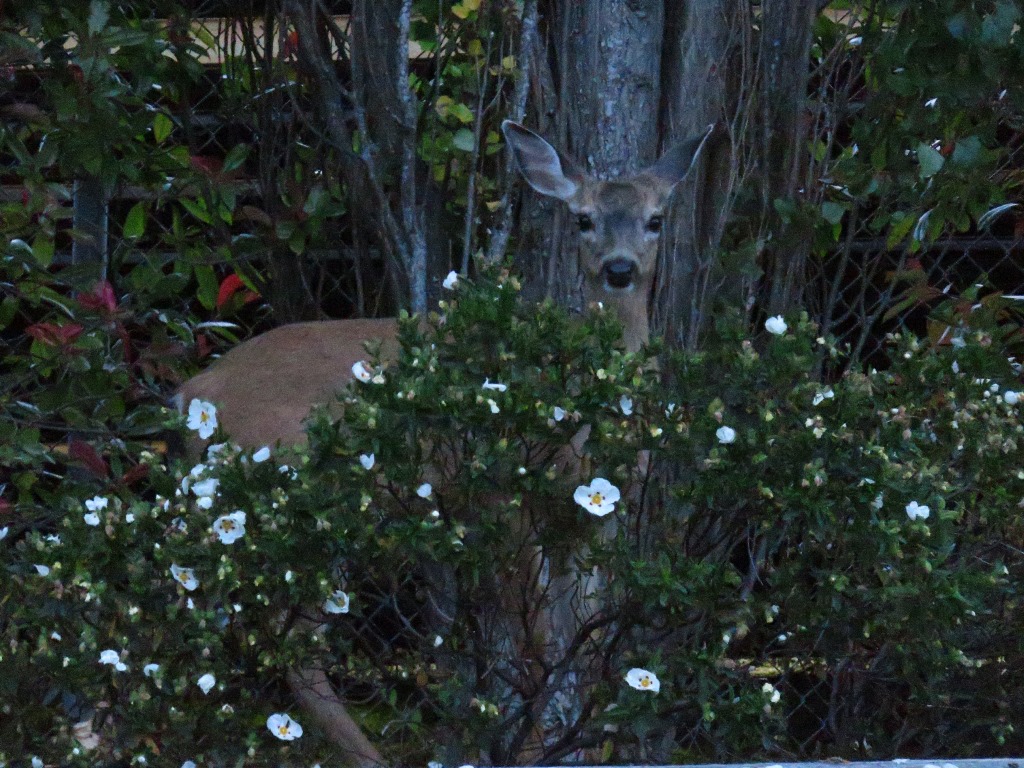
We’ve spotted Columbian black-tailed deer on all the San Juan Islands we’ve visited. Several are known to swim between the islands. These smaller ungulates, or hoofed mammals, stand under three feet tall at the shoulder and weigh about 200 pounds. During early-morning or late-evening walks, we’ve seen them grazing in fields, munching ripe blackberries or apples, and meandering the beach at low tide to lick salt from kelp. When you frequent the same roads, you will notice the trails they use and can have your camera ready to grab a quick photo. Snapping twigs are often your only clue of their presence as they browse the tips of sword ferns a few yards away, hidden from view.
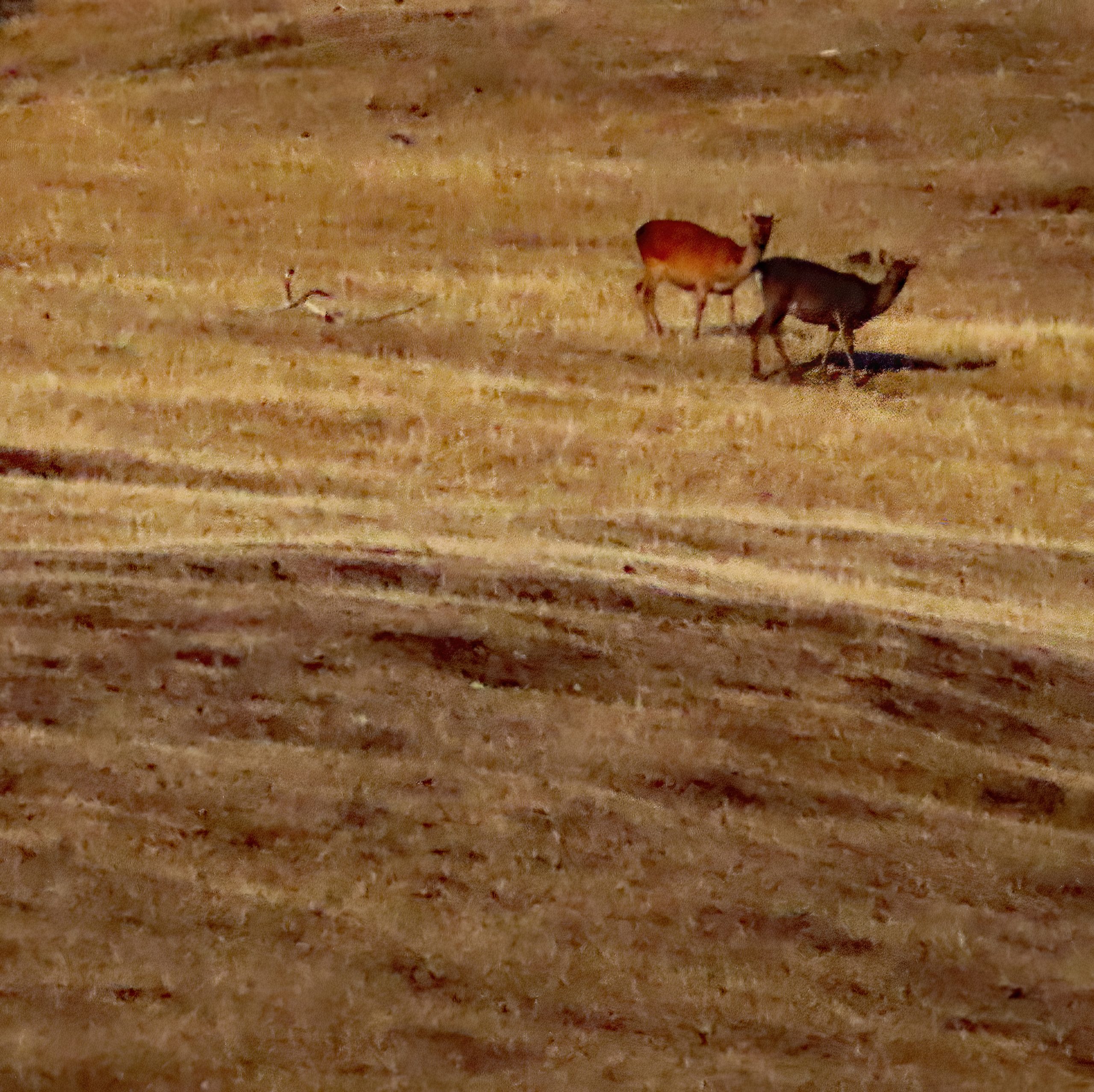
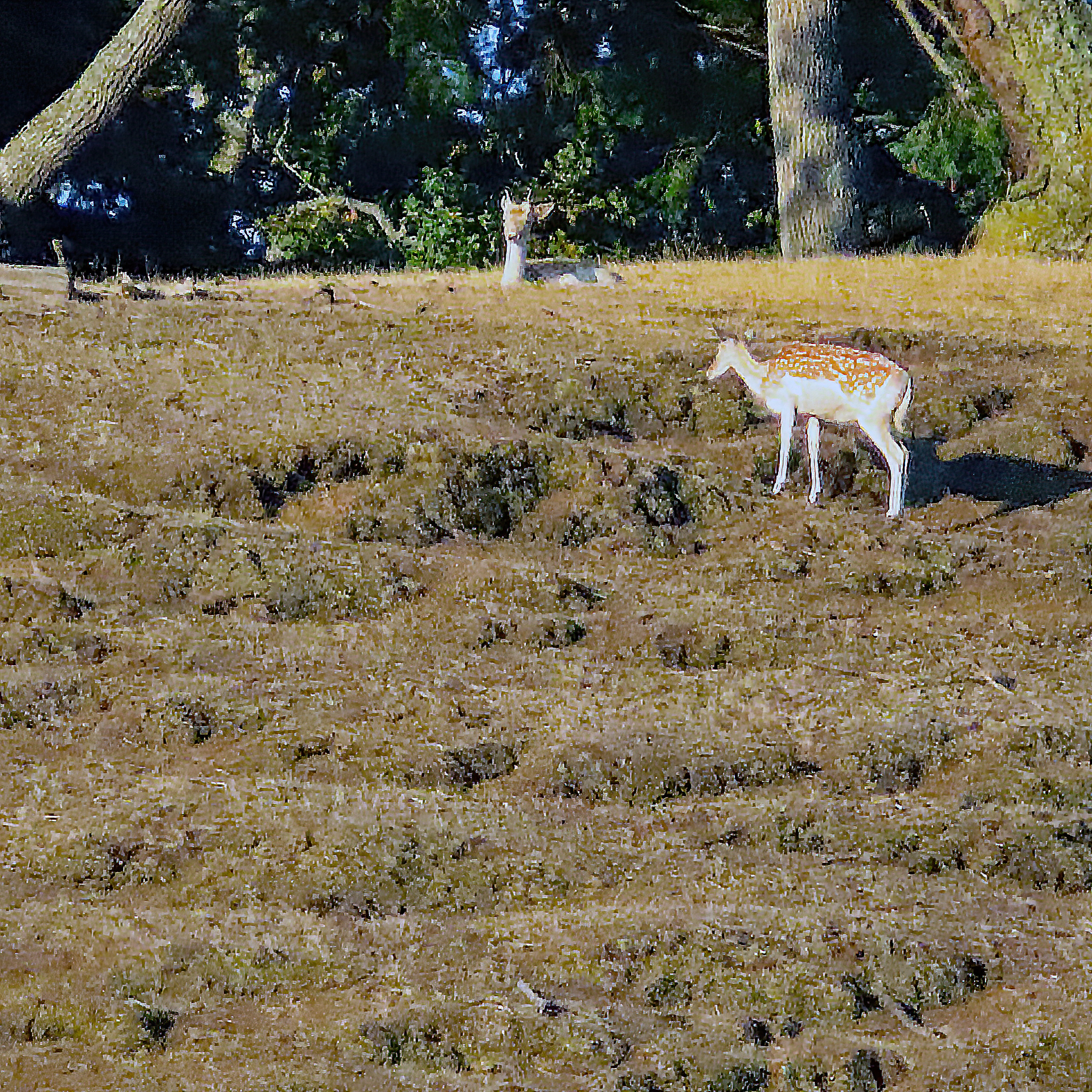
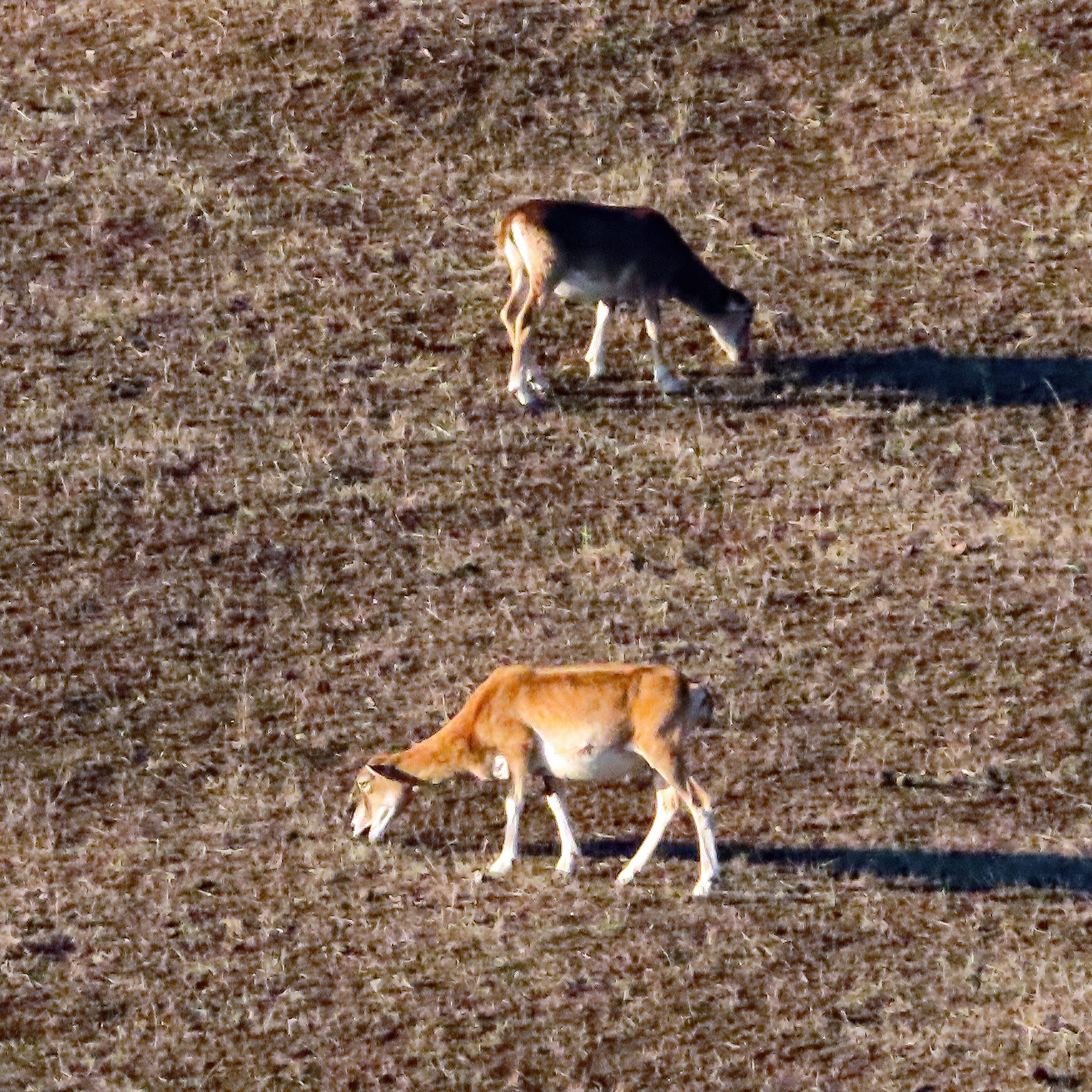
Two exotic deer live on private Spieden Island, the Sika deer from Asia and the Fallow deer from Europe. Both species were imported in the 1970s and 1980s, along with Moulton sheep from Corsica, as part of a game hunting enterprise for guests.
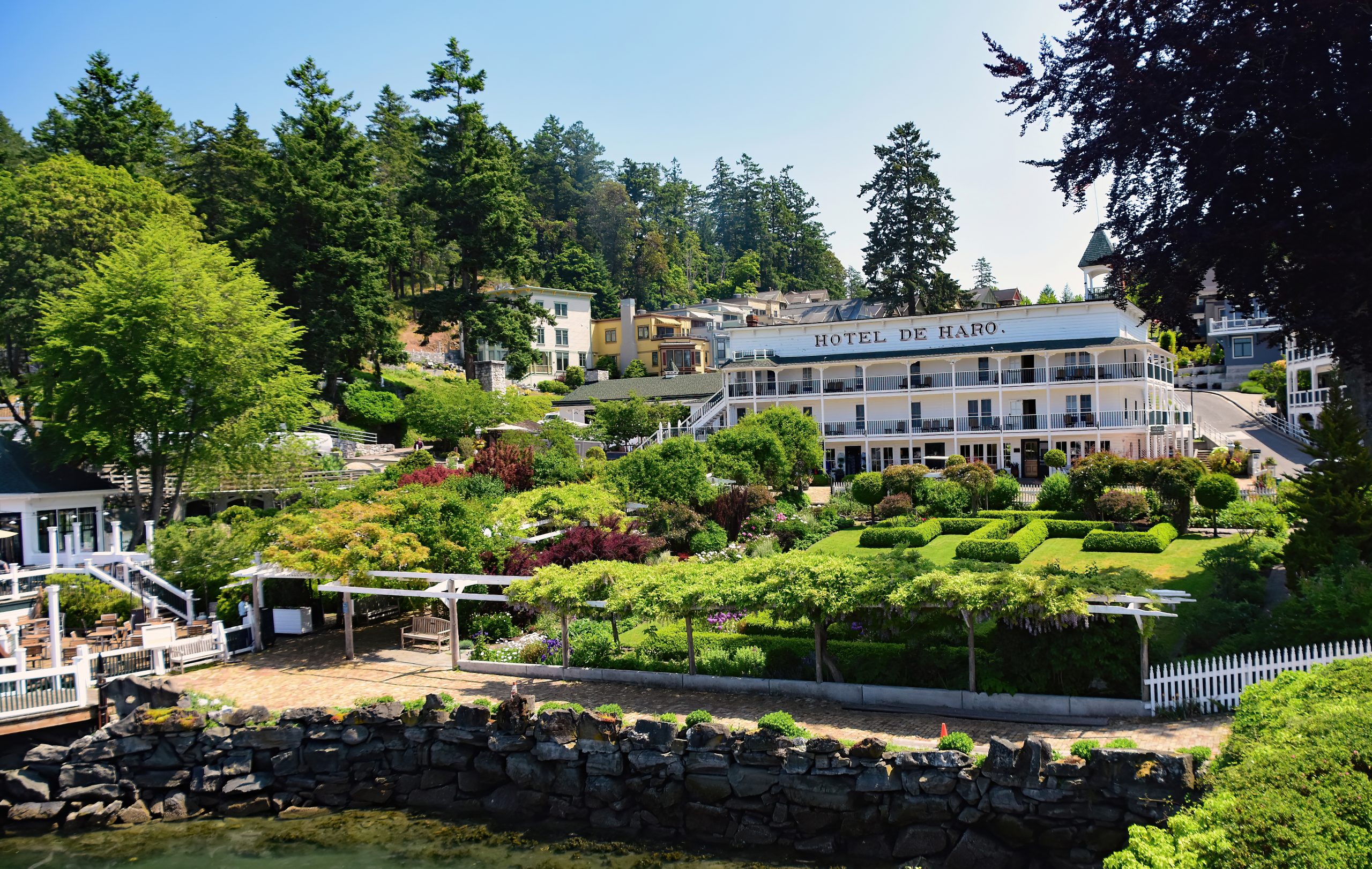
One of Spieden Island’s invitees may have been John Wayne, who used to stay on nearby San Juan Island at the Roche Harbor Resort. In fact, the Hotel de Haro named the room where the late actor stayed…the John Wayne Suite.
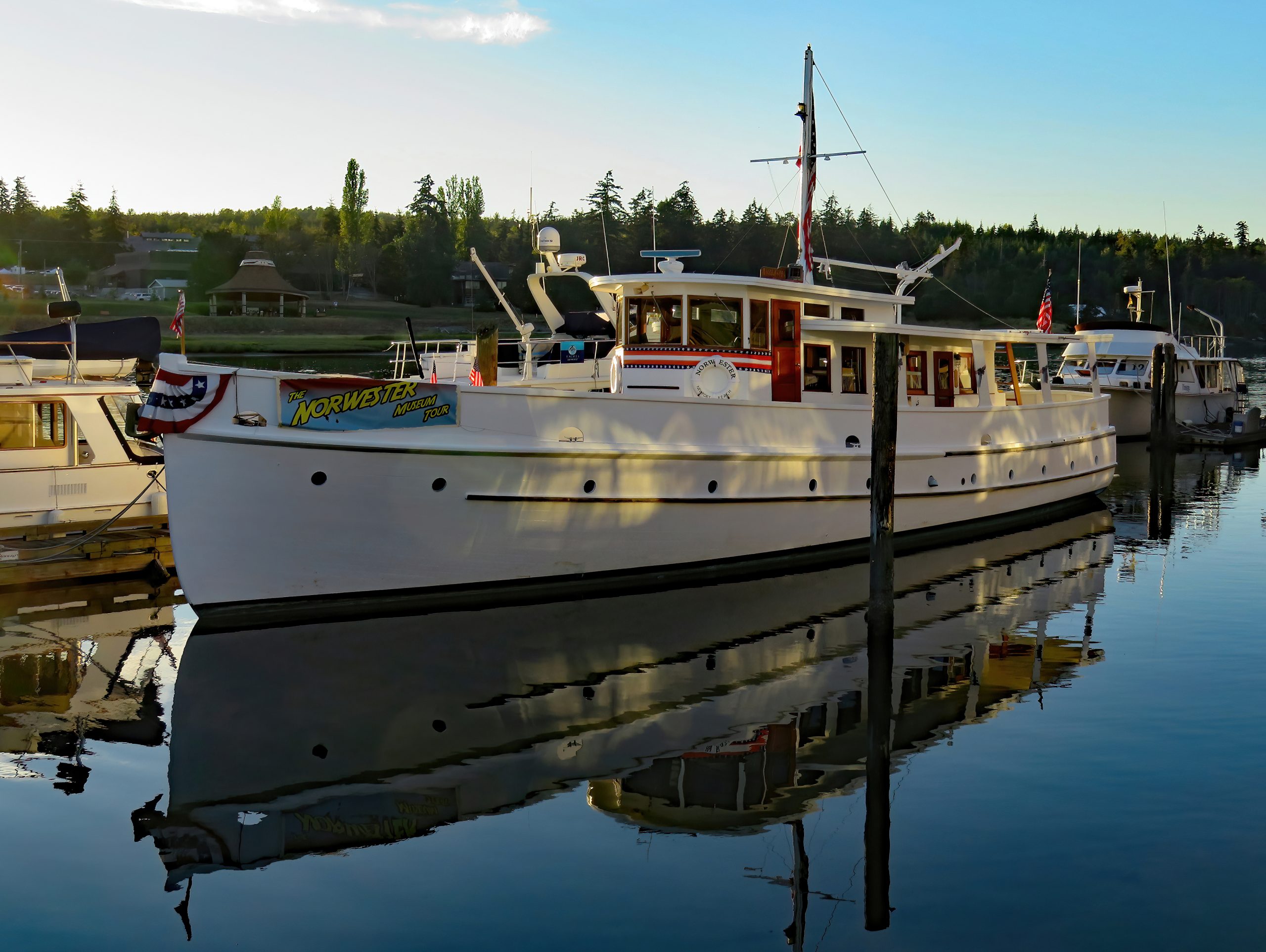
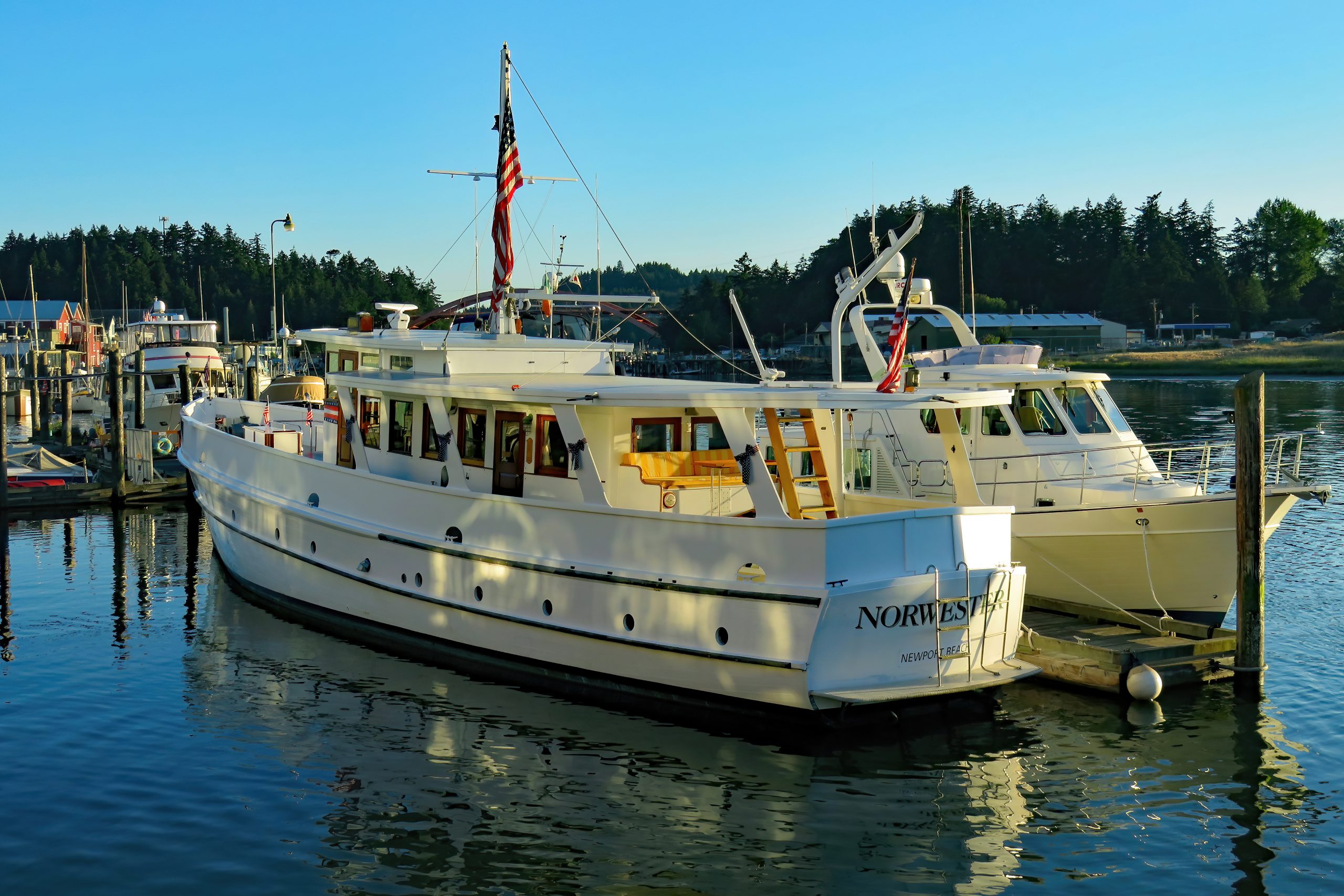
The first yacht John Wayne owned, MV Norwester, was a familiar sight at the Roche Harbor marina. When we first started sailing in the islands, the classic wooden boat caught our eye because of its shipshape condition. Several years later, we discovered the most recent owner had started offering public museum tours of the ship on the LaConner, WA, waterfront. Sadly, the 89-year-old vessel struck a reef near Prevost Harbor on Stuart Island and sank on April 24, 2021, during the crew’s final shakedown voyage before launching summertime charters.
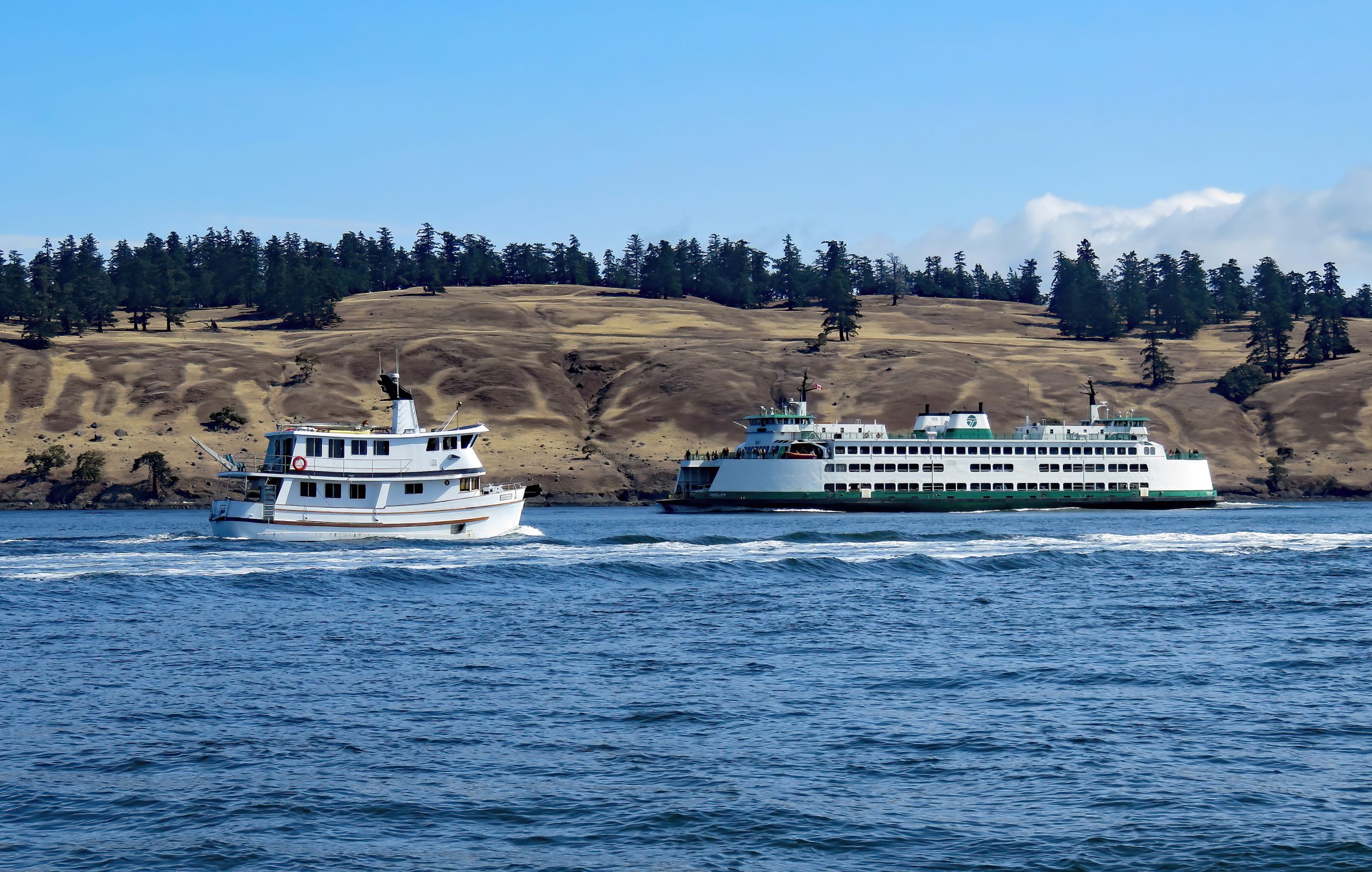
Although you may prefer warm summer weather for boating, the best time to see Spieden Island’s deer is in the fall, winter, or spring when the grass is greener on the island’s southern side. Tour boats operating during the shoulder season that sail through Spieden Channel on their way to watch whales will often slow down to let their passengers take photos. However, in 2030, when the Washington State Ferries resume service on the route from Anacortes, WA, to Sidney, British Columbia, Canada, everyone will have an opportunity to see the deer as the ferries pass by Spieden Island daily.
But do you know who organized this international ferry run starting on April 26, 1922, as an experiment? None other than Captain Harry W. Crosby, a relative of Bing Crosby, who skippered the Harvester King, the 96-foot converted kelp harvester powered by a single, low-horsepower diesel engine able to carry ten automobiles.
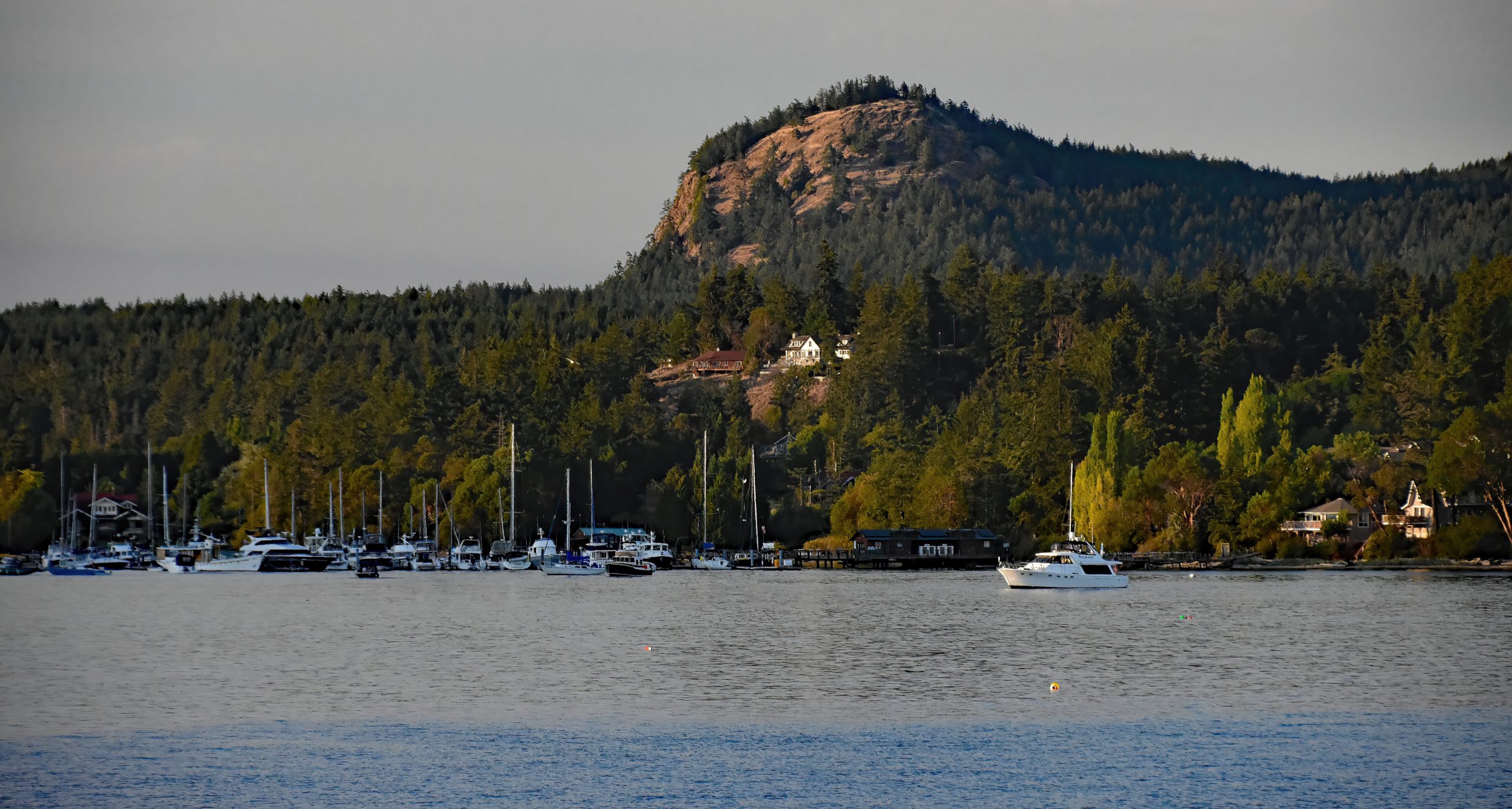
The first residents of the San Juan Islands to hunt the Columbian black-tailed deer were the Northern Straits Salish Indians, including the Lummi, Samish, Saanich, Songhee, and Semiahmoo tribal nations. In 1859, the Hudson’s Bay Company stationed a party of four French-Canadian hunters on Orcas Island to keep Fort Victoria supplied with venison. Two of these men, William Bradshaw and Louis Cayou, married native wives and settled near the village known as Deer Harbor.
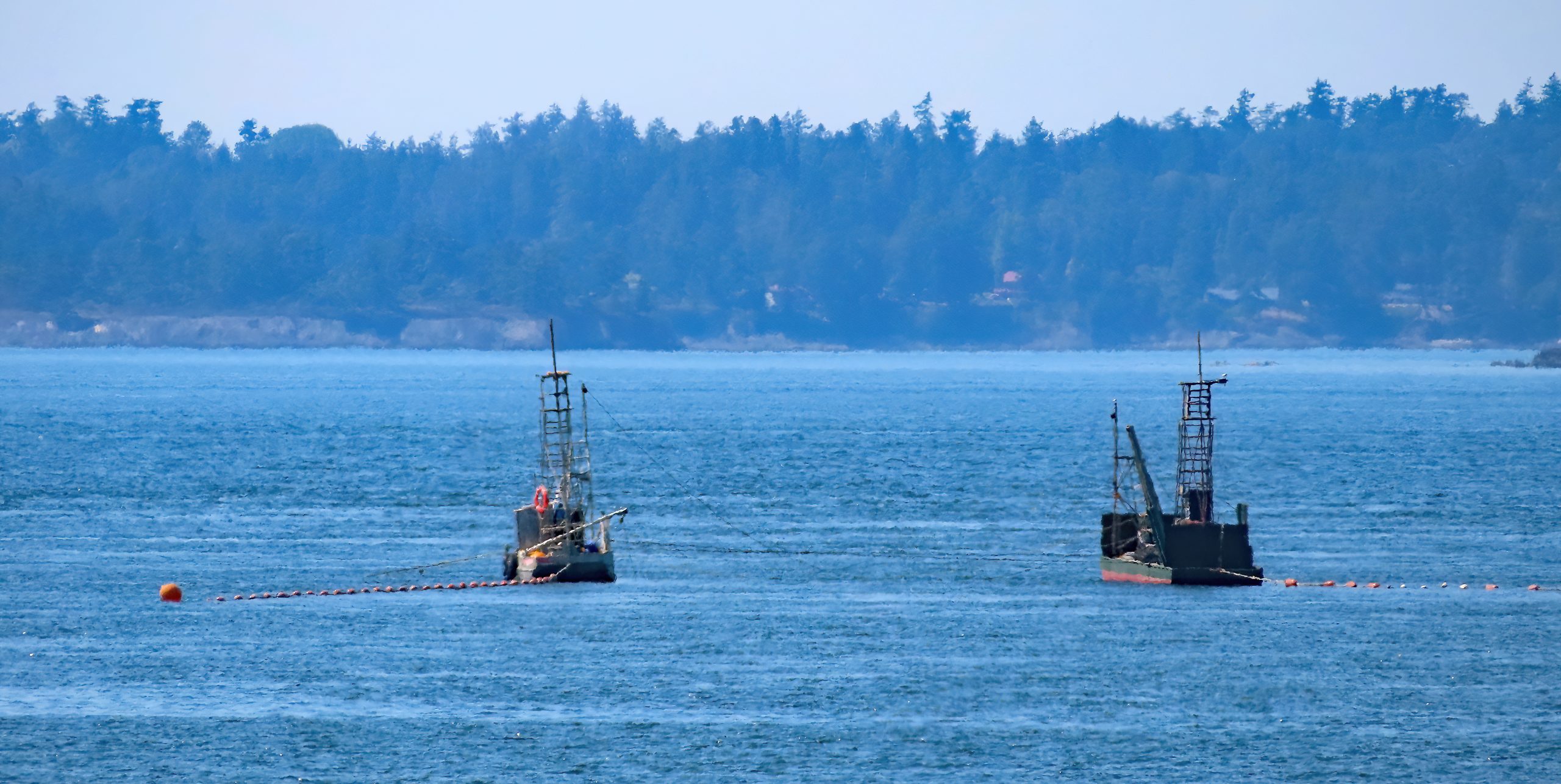
Soon, the Cayou family started fishing. One son, Henry Thomas Cayou, is credited with owning the first fish trap built in 1888 in the San Juan Islands. He placed it offshore of Eagle Point on San Juan Island. Using reef-net boats and fishing traps, it is claimed he caught over five million salmon in his lifetime. No wonder he invested in a cannery at Deer Harbor and a boat-building operation on Decatur Island.
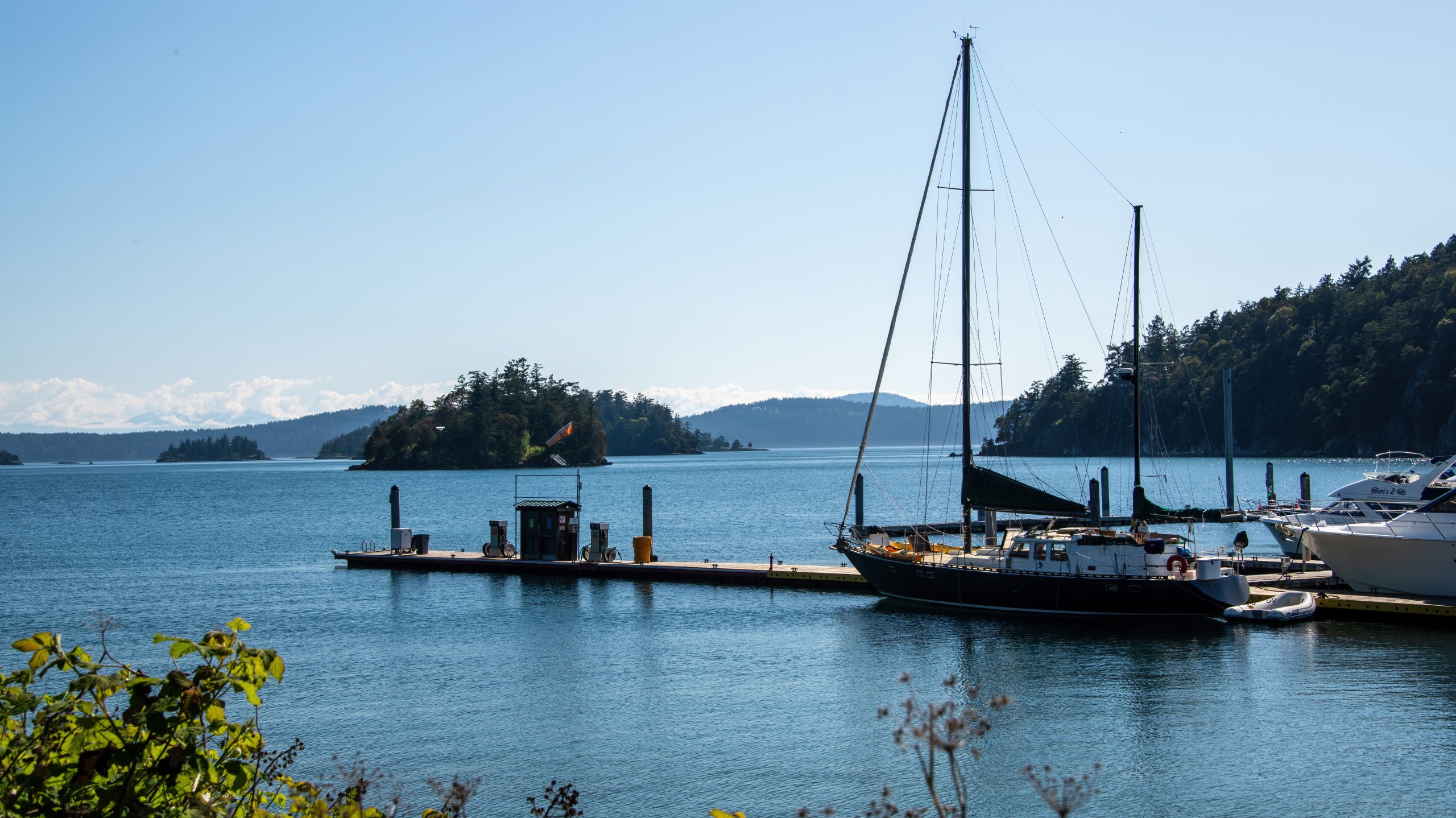
While it’s unknown when the late actor, Gene Hackman, purchased Fawn Island, the main 3,514-square-foot home was built in 1978. Included with the property were two guest homes. According to the Puget Sound Business Journal, he sold the island in 2005 to buy a more secluded one in British Columbia, Canada. An understandable decision, since it’s only a five-minute boat ride from the island’s private 40-foot dock to the Deer Harbor Marina with its abundant boat traffic, especially in summertime. Famous for his Hollywood roles, Gene Hackman won two Oscars. He was named Best Actor in The French Connection and Best Supporting Actor in Unforgiven. But did you know he also became a novelist, releasing his first of several books in 2000?
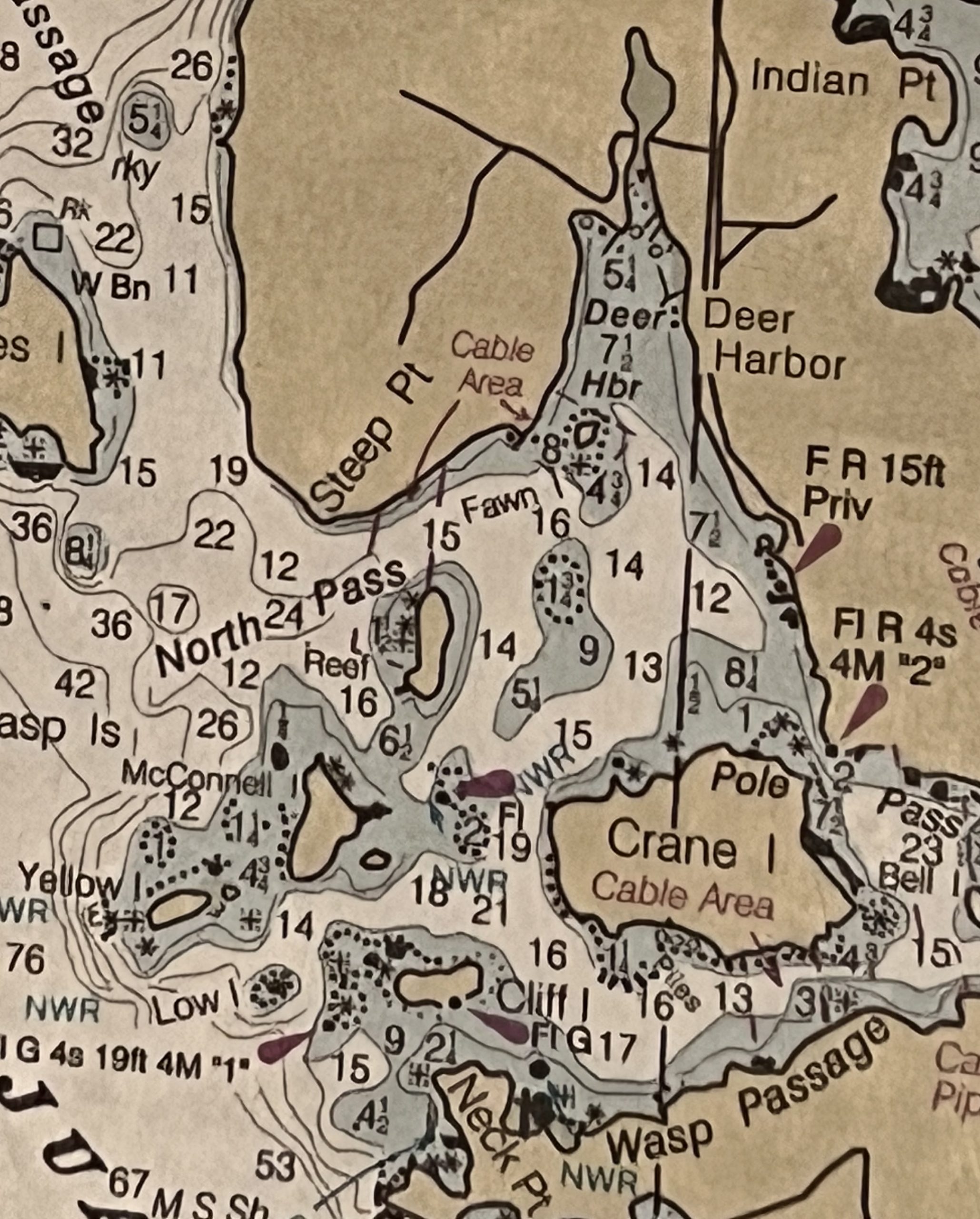
Once called Fisherman’s Island, the wooded 2.3-acre island changed hands in exchange for the erasing of a legal fee. While you can sail on either side of Fawn Island, steer clear of the shoal extending from its southern end as you enter Deer Harbor.
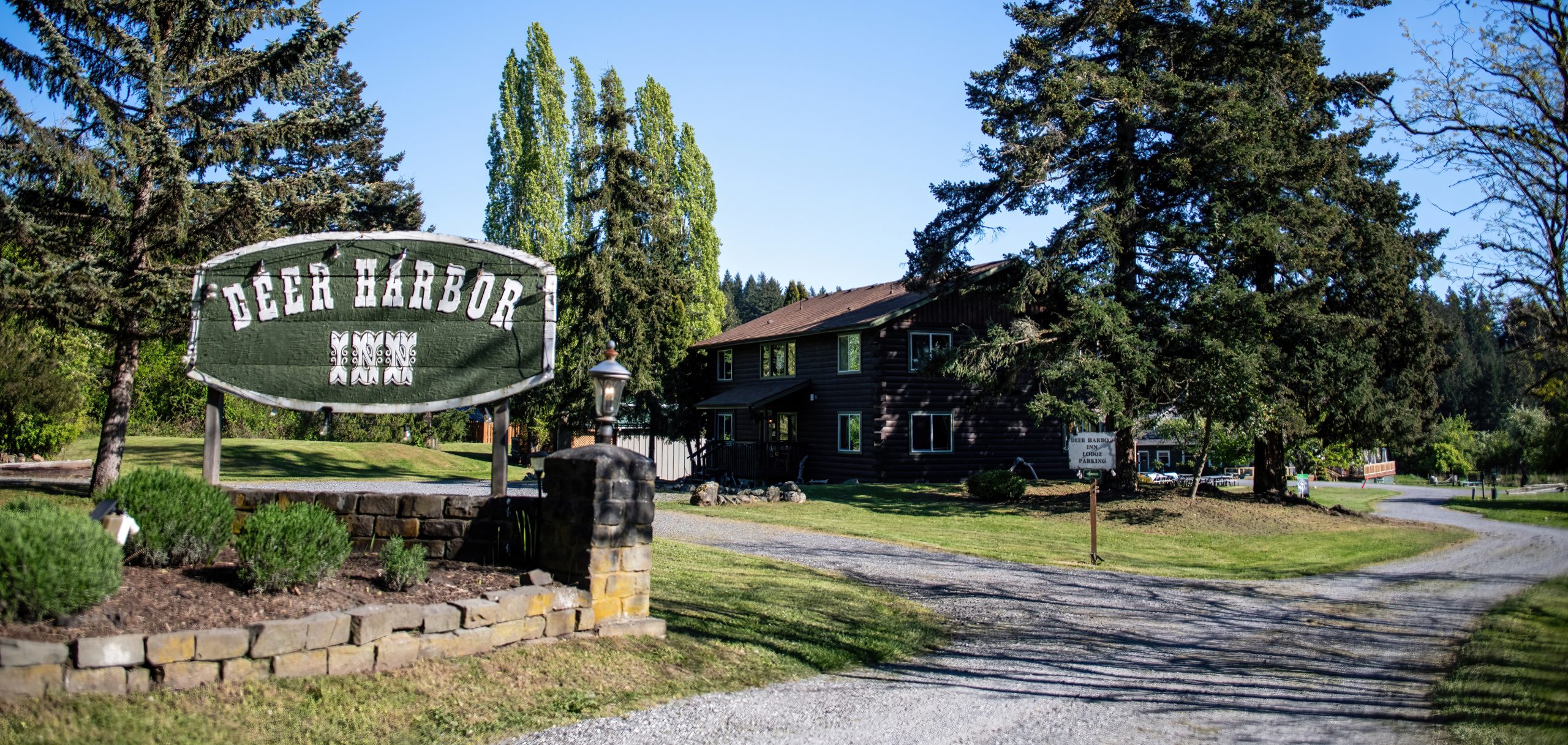
Did you know Deer Harbor is where the resort business got started in the San Juan Islands? In 1910, when the Seattle schoolteachers who had boarded at Pat and Mary Norton’s farm wanted to return with friends that summer, Mary stitched canvas tents attached to timber frames. These structures evolved into canvas tents constructed on wooden platforms—like those used at Four Winds * Westward Ho Camp. After 1925, families could rent cabins with kitchens or sleeping cabins and eat meals in a central dining room. Eventually, the Norton Inn offered guests a 150-seat dining room, tennis courts, and a saltwater swimming pool, enjoyed by both locals and tourists. Renamed the Deer Harbor Inn, the resort retains its yesteryear charm with modern amenities. If you need an excuse to visit Deer Harbor, plan on cruising to the annual Wooden Boats Rendezvous held each Labor Day weekend.
On the opposite side of Orcas Island (south of Moran State Park by road) is Buck Bay inside the entrance to East Sound, with Doe Bay and Doe Island overlooking Rosario Strait.
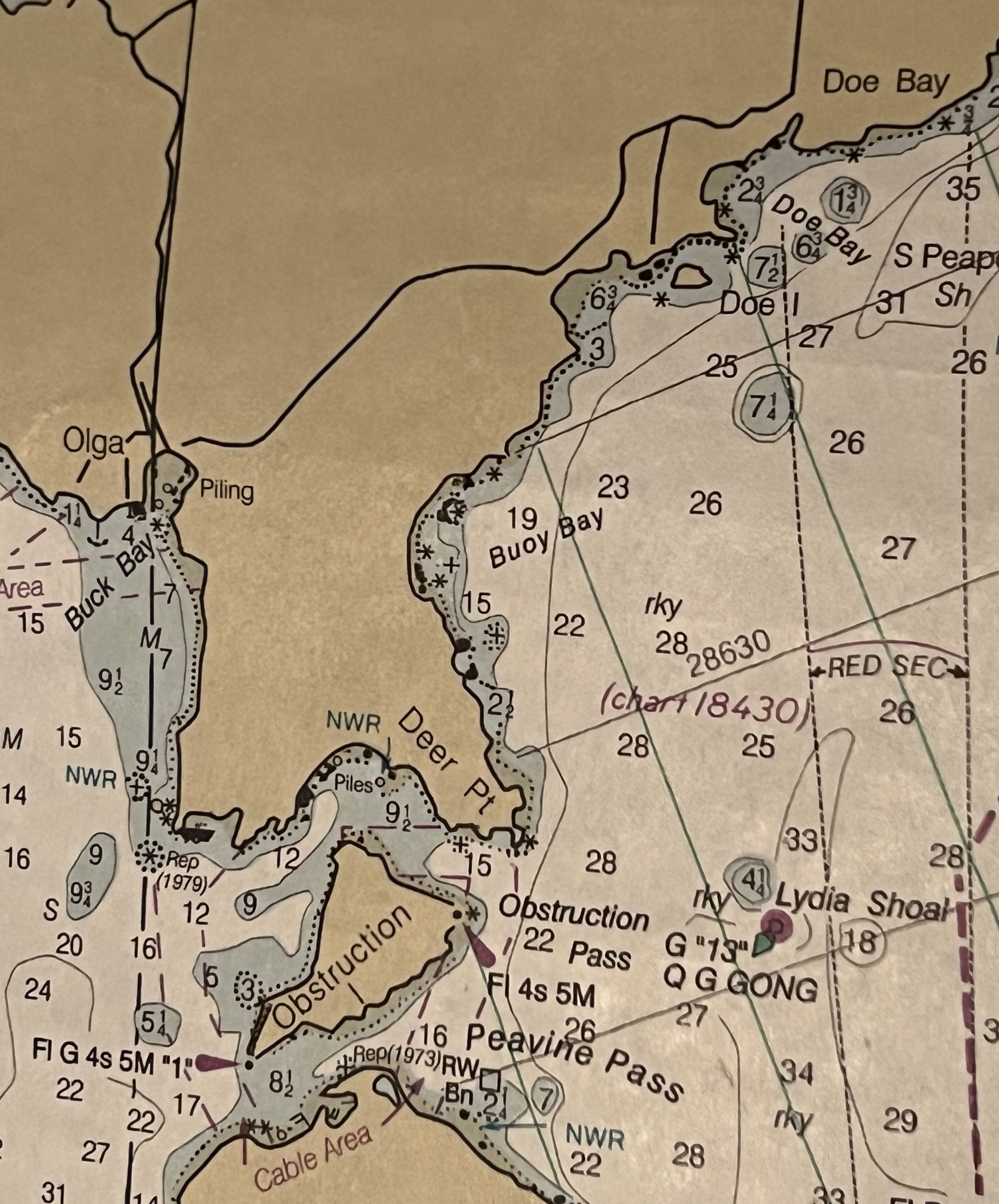
Like some of you, I bicycled in the San Juan Islands before I learned to sail. One of my fondest memories is arriving at the quaint village of Olga on Buck Bay’s northern shore after a bumpy ride along a dirt road. In 1860, William Moore, another Hudson Bay Company deer hunter, settled here with his native wife. By 1873, a log cabin served as both a school for thirty-four students and a church for Sunday services. A post office opened in March, 1890. After a store and hotel were built, Olga became a vibrant summer community. This may explain why a ferry ran from nearby Obstruction Pass to Chuckanut Bay, south of Bellingham, over forty years ago.

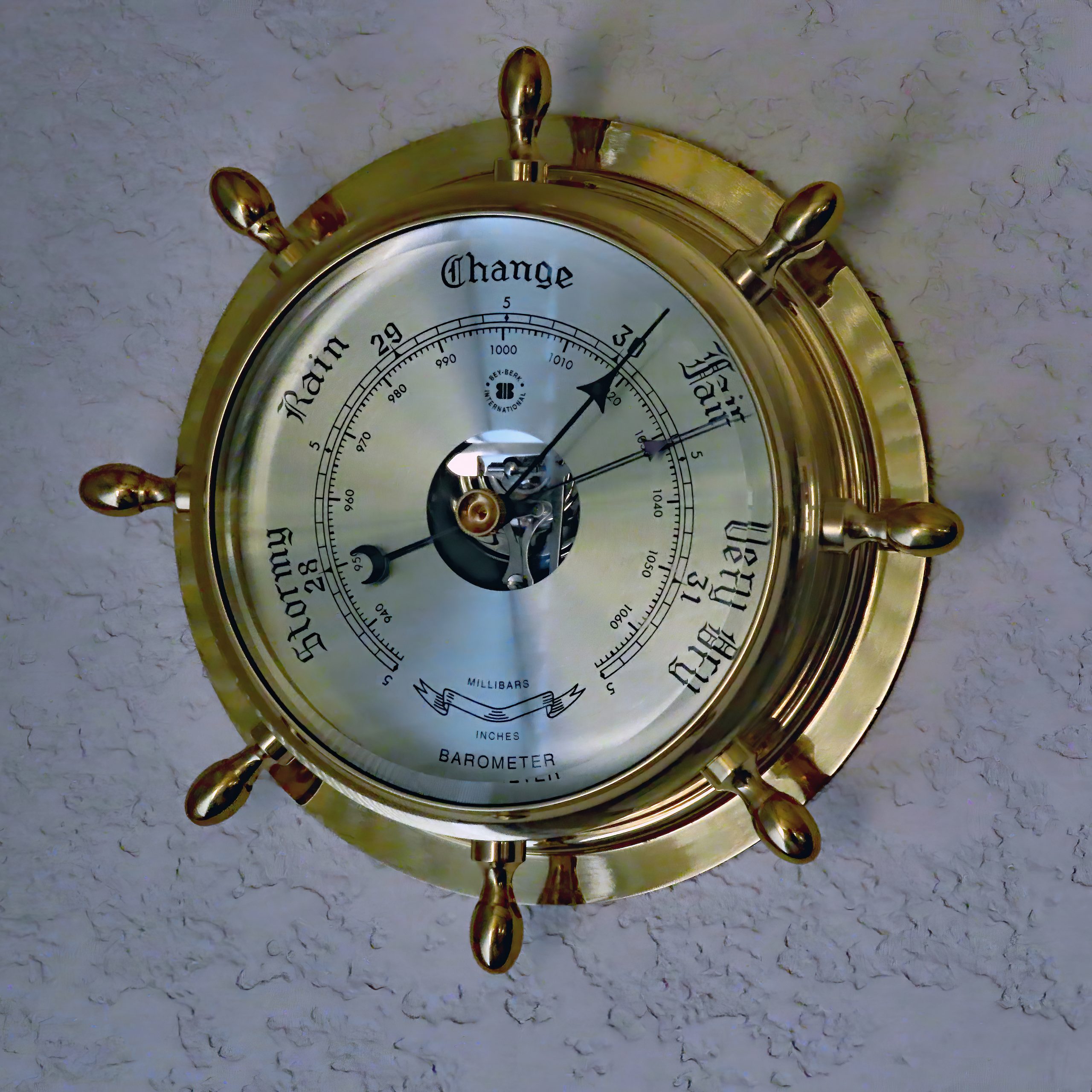
Perhaps most remarkable is the story of British-born Richard Charles Willis, who settled at Woodside Farm near Olga in 1888. He requested and waited two years to receive U.S. government instruments for recording the weather. The result? The Willis family has maintained an unbroken weather record on Orcas Island since 1890, the only continuous weather report in the San Juan Islands and one of the longest in the Puget Sound region!
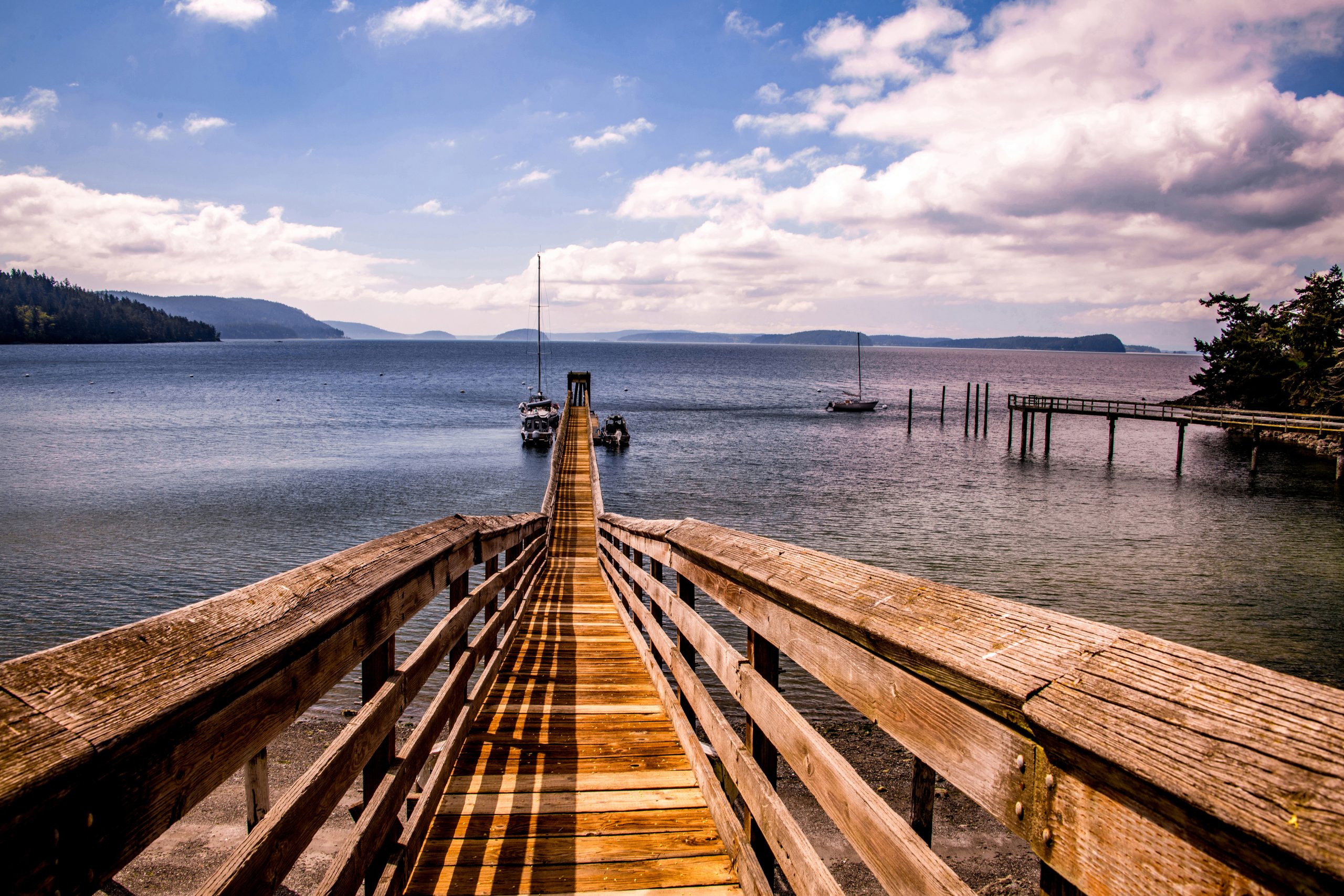
Today, boaters can anchor along Buck Bay’s south shore in calm weather or stay for two hours at the Washington State Parks public dock. There is water, but no power, and the Olga Community Club maintains the dock and charges a small fee for overnight stays. But avoid the rock submerged at high tide in the center of the bay. Love seafood? Visit Buck Bay Shellfish Farm to purchase fresh oysters and clams or enjoy them cooked, along with Dungeness crab and fresh fish, at their bayside bistro. But call to see if they are open before you visit. And, if you arrive by car, swing by the seven-acre, forested Buckhorn Preserve with dome-shaped Buck Mountain north of Eastsound village.
Occasionally, a Washington State ferry will enter the San Juan Islands through Obstruction Pass rather than its usual Thatcher Pass route. Deer Point is located at the northeast end of the channel. This is where you can choose to sail west through Obstruction Pass into the islands or cruise north in Rosario Strait to Doe Island Marine State Park on Doe Island and/or to Doe Bay Resort and Retreat on the shores of Doe Bay.
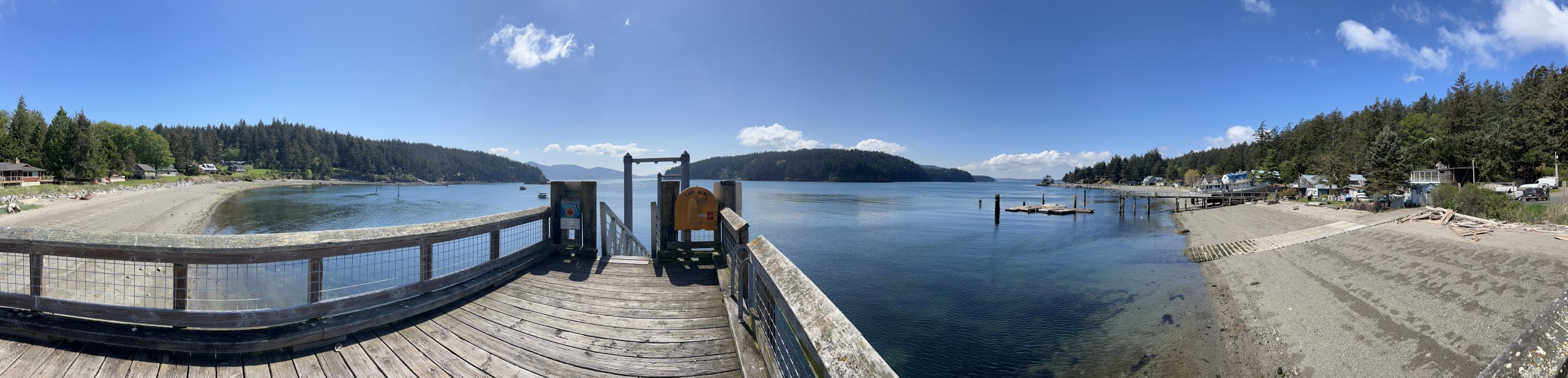
Doe Bay was settled in 1871 by John Viereck and Henry Legbandt, both German men who married native wives. Henry, a sailor, deserted his ship at the mouth of the Fraser River, stole an Indian canoe, and paddled with a companion to Whatcom (now Bellingham) before reaching Orcas Island. His younger brother, John Peter Legbandt, arrived with his Danish wife and daughter about ten years later. Several more years passed before Peter Morris, a French-Canadian, and his native wife joined them.

The Doe Bay Post Office was established in 1891 at John Viereck’s home, where he served as its first postmaster. In 1894, John Peter Legbandt donated land for Doe Bay School’s twenty-two students. But it wasn’t until 1908 that Anton Ohlert built the Doe Bay Store. When the first dock was constructed two years later, the village became a popular boating destination.

Today, visitors can dine at the Doe Bay Café and stay in cabins, tents, or yurts at Doe Bay Resort and Retreat, where kayak tours to Doe Island Marine State Park are offered. Boaters can reserve the resort’s private mooring buoys or anchor at their own risk, keeping a weather eye on Rosario Strait.
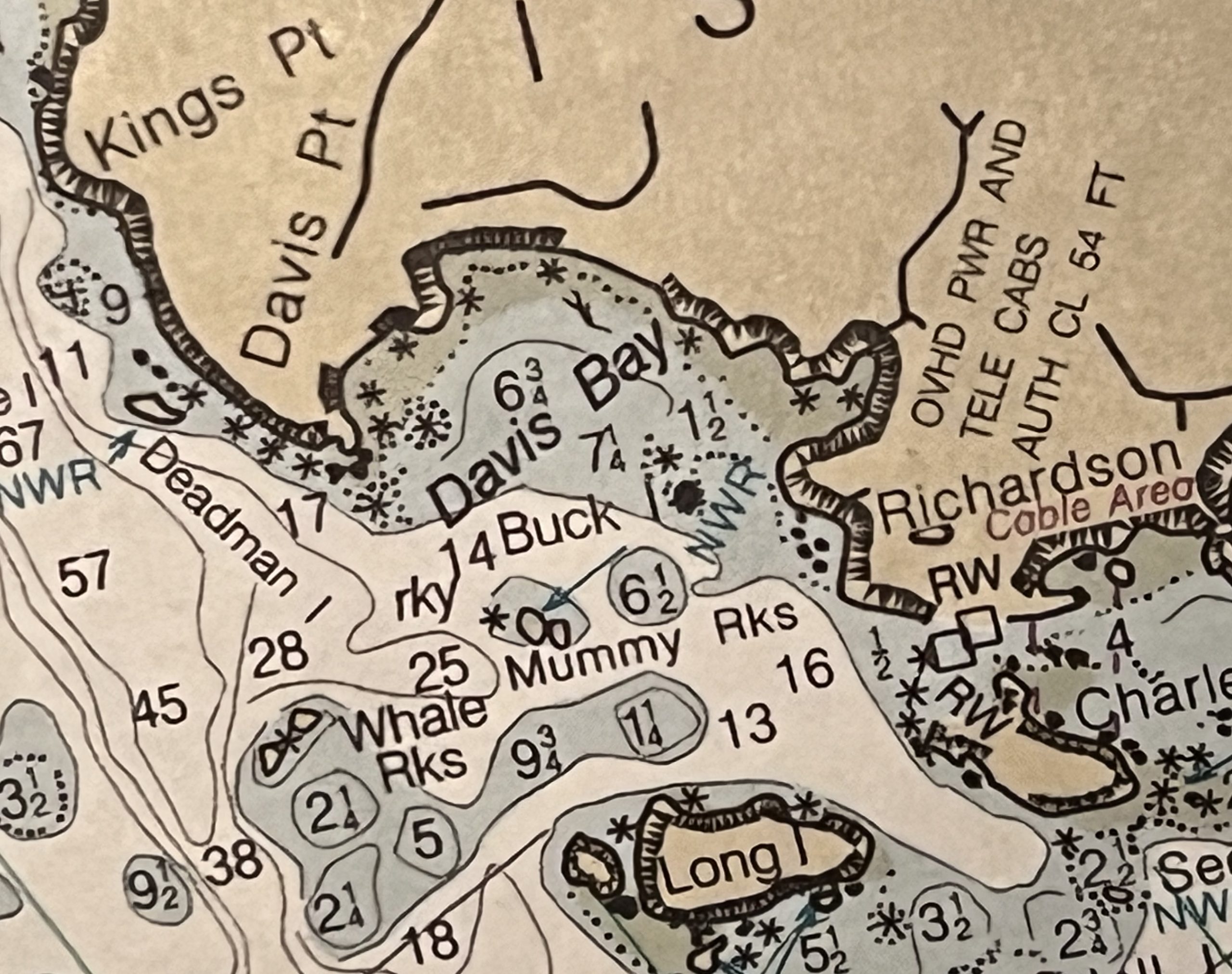
Besides visiting Buck Bay on Orcas Island, you may be able to spot Buck Island in Davis Bay along Lopez Island’s western shoreline. Together with Mummy Rocks and Shark Reef, the trio are wildlife refuges that prohibit boaters from stepping ashore.
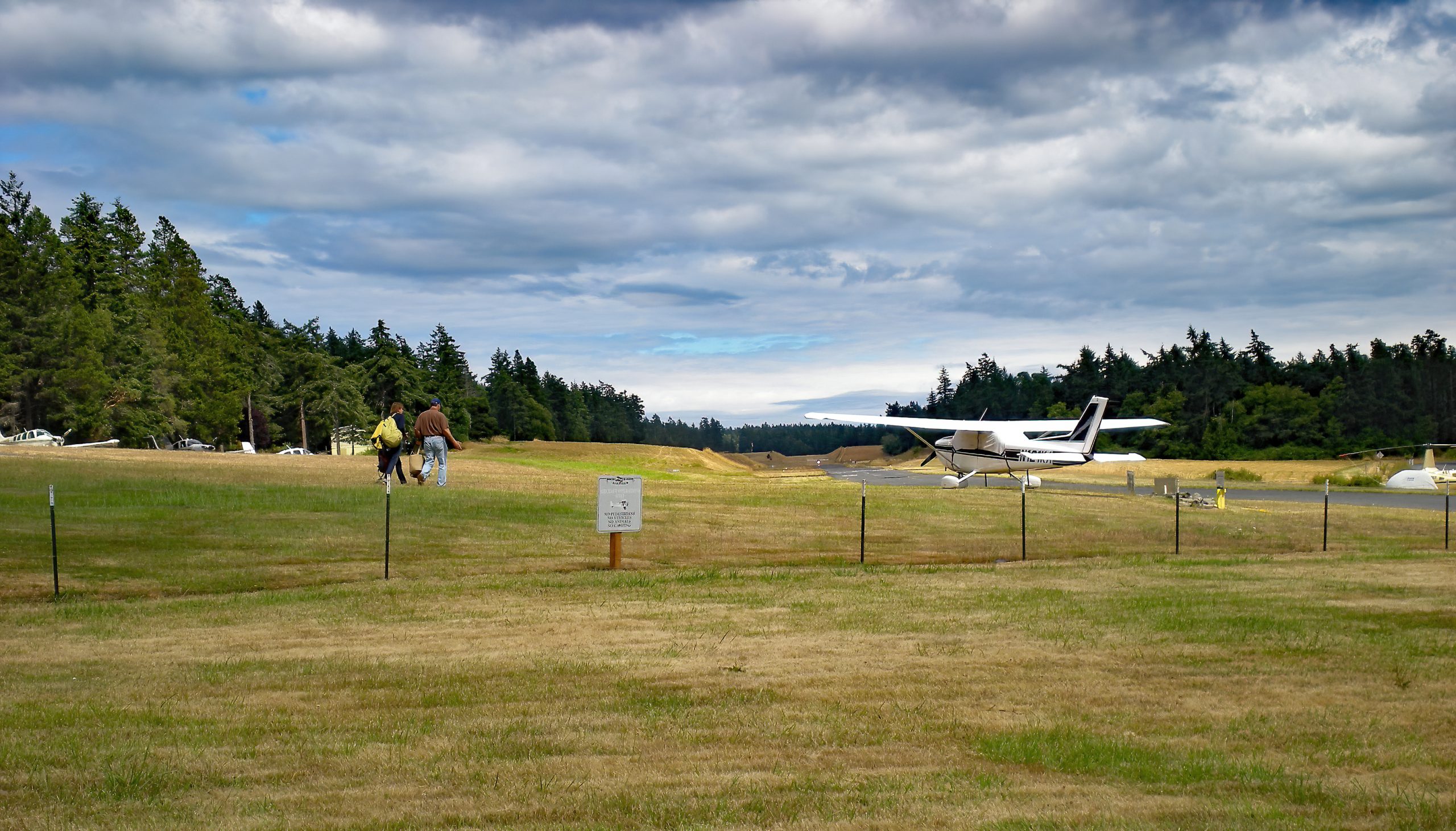
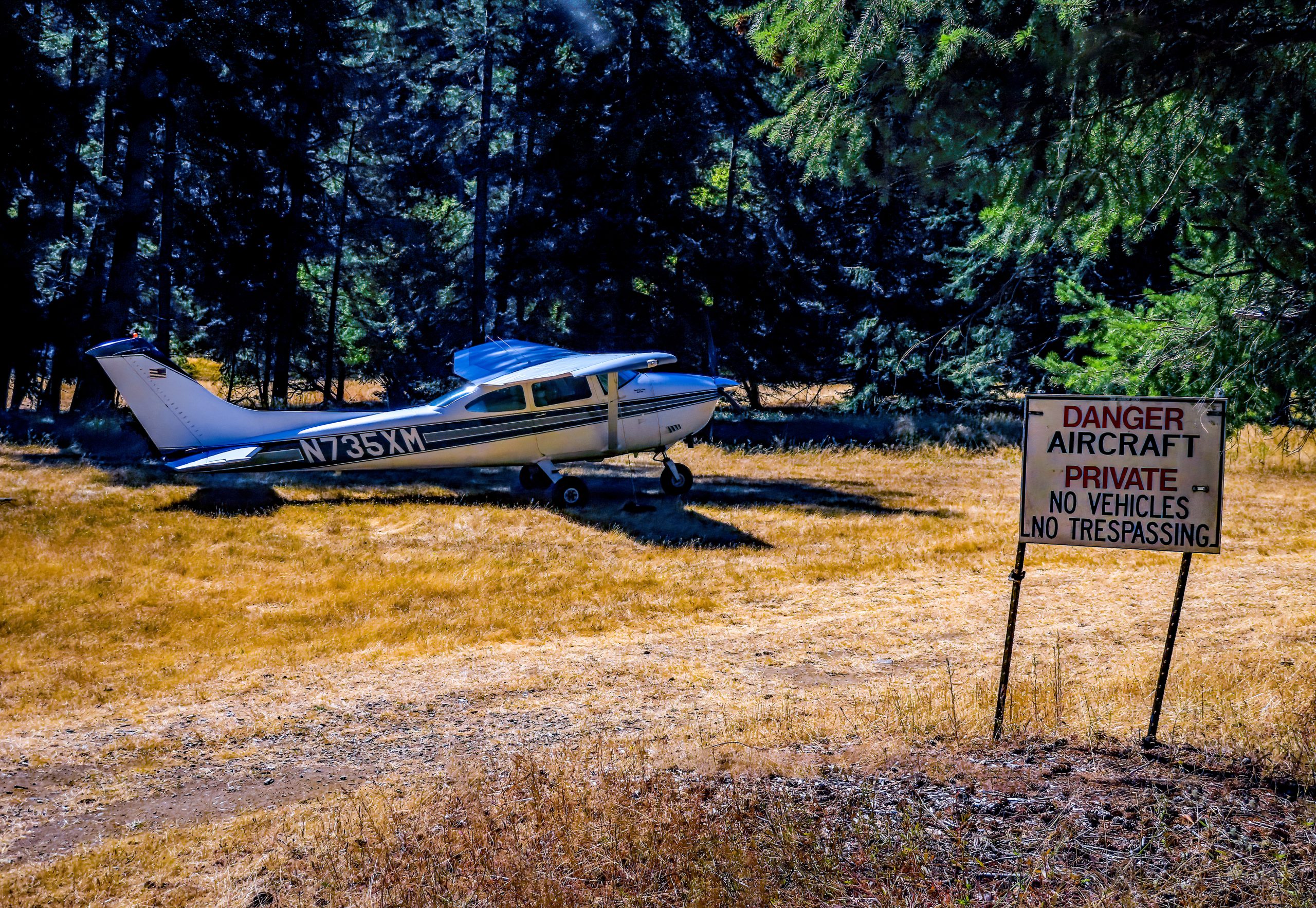
You might ask, when have deer become a problem in the San Juan Islands? One evening, we saw the pilot of a small plane buzz Roche Harbor Resort’s runway, scattering a trio of deer, before circling to land on the grassy airstrip. Pilots using similar airfields, like those on Crane Island and Stuart Island, make this a common practice.
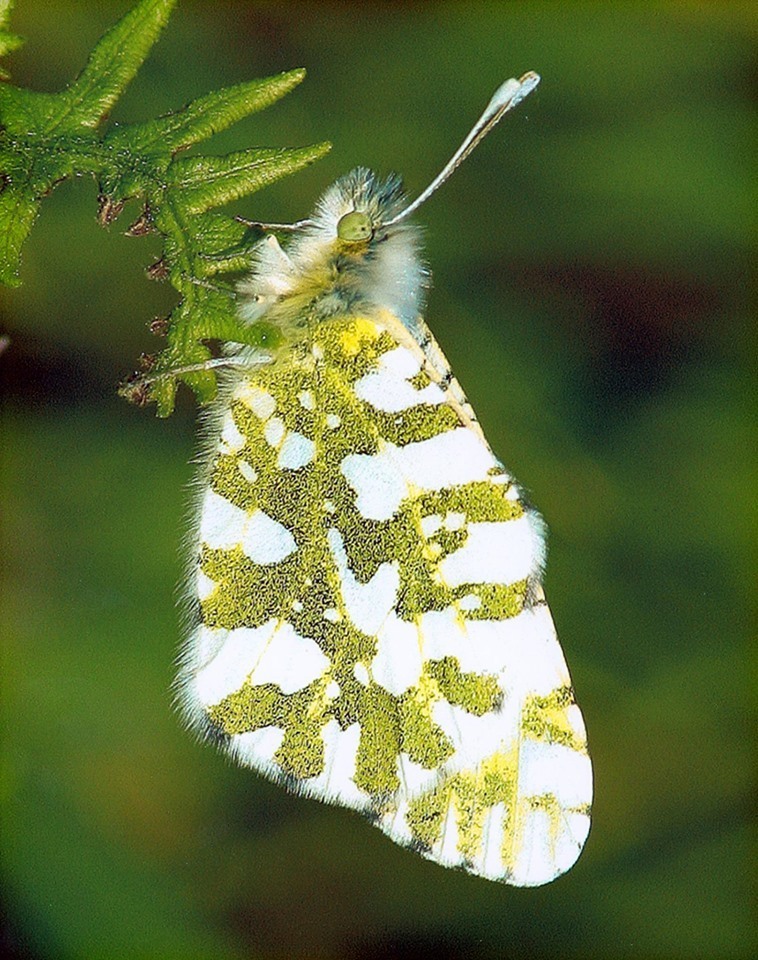
A second concern is that deer feed on the blooms and pods of mustard plants, nibbling on those eaten by the endangered Island Marble butterfly. Thankfully, this isn’t the case where, due to little surface water, the deer don’t linger to devour Yellow Island’s wildflowers, a Nature Conservancy-owned property. Another situation occurred in 1960 on Blakely Island. One deer became so tame that he scampered onto the porch of the Blakely House Restaurant and stared through the windows at the startled patrons, earning the name Crazybuck.
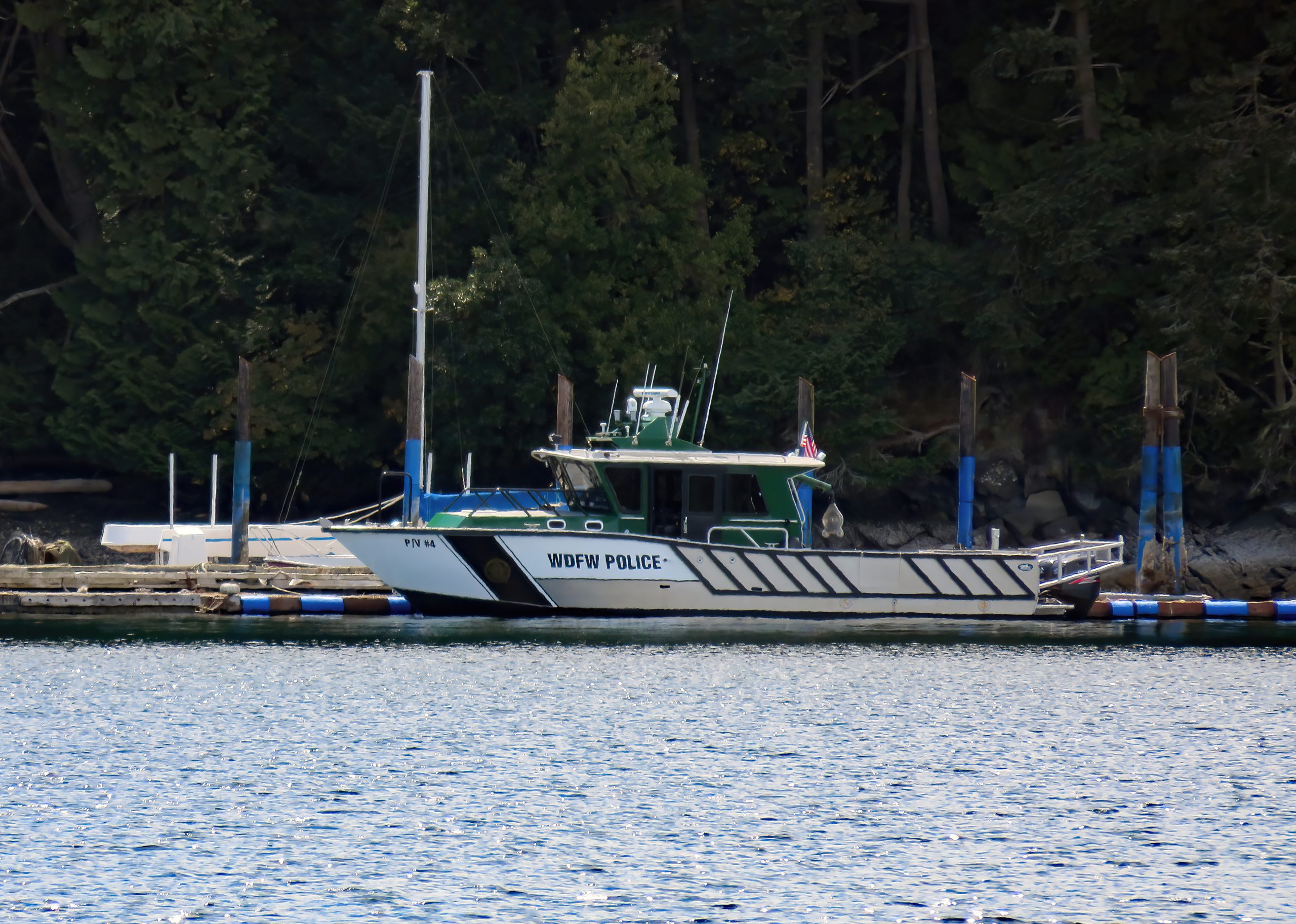
Today, the Washington Department of Fish and Wildlife controls the deer population by selective hunting and habitat management.
Finally, a few additional “deer” tidbits. A controlled burn on Yellow Island in 1999 spurred the Fawn lilies to bloom much stronger than the previous year. And at Jakle’s Lagoon on San Juan Island, you can find White-footed Deer mice burrowing through matted vegetation to build runways and tunnels. More, have you heard of Deer ferns? What about Deer mushrooms growing out of downed Douglas fir trees?
Thank you for reading my dive into all things deer-related in this post.
Blessings,
Deb
Love the plant information. Its amazing how much good a controlled burn can do!
So true! Thanks for your comment.